Most of the ideas are from the work of Magnusson. I have been preaching this research for 15 years and was basically motivated because of self intentions. My flexibility is poor and I never thought that stretching the spine made any sense for low back pain prevention. I went out looking for some support and Magusson (1996) was the king in this area. A recent review is here (its free) He also has great research questioning the utility of eccentric loading protocols for tendinopathy as he prefers heavy resistance training (click here). I have a quick post here inspired by his work related to high hamstring tendon pain.
This article is purely conjecture. I have no hard data and would not even know how to create a study to test for it. BUT, I consider it biological plausible.
Tightness is a common sensation for people with pain and for athletes during training. However, when someone reports being tight in a region I find that they rarely are. Their range of motion will be wonderful, perceptually their tissue will feel “loose” upon palpation (warning: highly subjective on my part) yet they report tightness. Main point being there are no objective signs of tightness or limits in their range of motion. So why does the perception of tightness occur? (more…)
Purpose: Exercise videos for those doing shoulder rehabilitation
Preamble
The same exercises or movements can be used with different intentions and to achieve a different goal. Some possible intentions being:
1. Motion is Lotion - we are moving your shoulder in a manner just to calm down nerves, decrease pain and get that pissed off shoulder happy with moving again. The amount of weight or resistance is not that important
2. Stress loading - for whatever reason we want to stress your shoulder and shoulder girdle musculature. You might have some weakness (e.g. prolonged immobility, post surgical) or we wish to increase the capacity of your joint and muscles to withstand load. Appropriate weight selection, speed of movement and technique is important
3. Motor control - certainly there is some overlap with the previous two intentions mentioned. But with this intention we might look at trying to change how your muscles work together. An example, is training both the internal and external rotator cuff during alternating movements. We are trying to get the cuff to pull the humeral head away from the scapula or just get the muscles happy working together again. Load or stress is important but so is learning the movement.
Purpose: Demonstrate simple movements to calm, move and make healthy some irritated nerves. Disclaimer: Not to be done if painful. Do 5-6 to start. Always under health professional guidance.
Limitations: Many of us assume that there is one right and better way to run. Deviations from that ideal are assumed to lead to injuries and decreased economy. This is still a debatable concept. Everything I write can be questioned so please do so.
Below is a video of Nicole Stevenson (www.nicolestevenson.com). Nicole is Canada’s former number 1 in the Marathon with a personal best below 2:33. Nicole is also a running coach
I wanted to highlight some probably beneficial components of her running gait. Future posts will look a deviations from this gait and how they might relate to injury. (more…)
Purpose: to provide some information about the pain experience
Why?: Understanding pain can help modify it
I don’t pretend to understand everything about pain. It is incredible complex and what we know is certainly involving. However, there is a lot of misinformation out there even from people that should know better. This article will link to a number of information sites that help explain pain. This is important because it helps you understand why things hurt. Understanding why something hurts can decrease pain but can also help you function better. Some basic concepts:
1. Pain is a perception. Signals (e.g. nociception or even pressure) come from the body and the brain creates an output that we perceive as pain. Ever heard of a soldier being shot and not feeling any pain until they were safe and out of harms way? If pain was some absolute thing that the brain has no choice to recognize than you would have no way but to feel pain any time a tissue was injured. We’ve all heard stories of people being injured but feeling nothing.
2. Your body does not have to be injured to feel pain. In fact you can lose a limb and later feel pain in that limb that no longer exists.
3. Tissue injuries (e.g. disc bulges, rotator cuff tears, tendinopathy) do not have to hurt. The body can have lots of so called “dysfunction” but this does not mean that you will feel pain. For example, 50% of people over fifty may have a rotator cuff tear but they experience no pain.
4. Emotions, beliefs, stress, past experiences etc can influence the pain that you feel. Pain is more than a punch in the arm.
5. The perception of pain can move around in your body and this does not mean that you are crazy. This is a normal finding when we experience persistent pain.
6. Pain changes how we move and how we function. Movement is often the key to resolving pain.
There is so much more than this but I will let the resources below provide better information.
Books
1. The sensitive nervous system (D Butler): a great academic reference
2. Explain Pain (Butler and Moseley): a patient’s guide to pain
Part of my MSc and my later biomechanics work looked at the swing angles of the pelvis and thorax during the golf swing. This area will be covered in detail as well as the relationship between physical function and injury and details on designing golf conditioning programs.
Audience: Therapists and patients with too much time on their hands
Purpose: Provide a mild critique of the utility of the prone hip extension test
Background
The prone hip extension test (or prone leg extension - PLE) is a very common clinical test in use for more than 20 years. Two influential clinicians have advocated its use although for slightly different reasons. Both Vladmir Janda and Shirley Sahrmann have described its use for decades. This blog will focus more on the clinical rationale that Janda proposed.
Purpose: To give a pictorial basic background into the movements that occur in the sagital plane (i.e. looking from the side) of the lower extremity during running at 3.1 meters/second (about a 5 minute km) and “sprinting” at 3.9 meters per second (about a 4.17 minute km). (more…)
The “core” gets all the press. But when it comes to running research and injury prevention I would sooner extol the virtues the butt. The side of the butt to be most specific.
These muscles (gluteus medius/minimus and gluteus maximus) are huge in the relationship to injuries to the knee, hip and spine. If you want to split hairs you can call them part of the core (you should, but most people don’t).
For a decade, I swear its been that long, researchers (and their readers like me) have advocated that runners should train these muscles and forgo stretching if they had to pick between the two exercise possibilities (I’ve softened my stance on stretching, more posts to follow). The exercises are easy to do and can be fit in after a good run.
To support these views the Toronto Star just published a summary of a paper by Reed Ferber out of Calgary. He runs a great lab and worked with Irene Davis (a superstar researcher in running biomechics), before starting his lab in Calgary. His research publications are quite exceptional and if I were still a researcher they would make me envious.
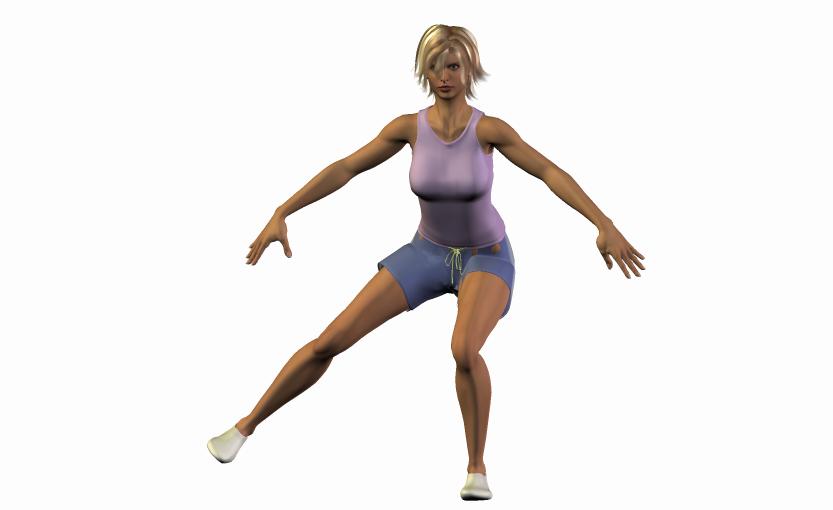
One of my favorites is below. The one leg squat with leg raise. Most Toronto Physiotherapy places advise that you do the clamshell or side lying leg raise. The problem (click here for a detailed review) is that the exercises only work the hip stabilizing muscles about 40% of their max. This is not enough. Muscles get stronger when you stress them. Unless you just had a hip replacement forget about these remedial exercises - unless maybe you truly are super weak here, then you need them.
Otherwise, train harder. You are an athlete and a runner.
Audience: Runners and Therapists Background: Changing running form, particularly through the aid of minimalist or barefoot running, is often proposed to change the type of forces that the body experiences during running. This in turn may influence of risk for injuries. Source of information: Zadpoor et al (2011), Lieberman et [...]
Repost: I originally posted this in October 2011 but lost it in the great porn/spam database hack debacle of January 2012. Purpose: To highlight some key differences in impact loading in older runners versus younger runners
Audience: Therapists and strength coaches Purpose: Questioning a common belief with the use of simple joint mechanics and anatomy. Caveat of Ignorance: This post is probably one that is more about splitting hairs and quibbling about small details than saying anything ground breaking. This post is unlikely to change your [...]
Below are Tensioner videos for your irritated and sensitive peripheral nerves. Warning: please only do this if your knowledgeable health care provider has taught these and specifically said that you should do these exercises. Gentler “Slider” movements can be seen at a previous post here: Slider Videos
Update: I am not the first to write about this area. I found a great post by Todd Hargrove tackling the same topic and saying much the same (he does it more succintly and I address a few other areas as well). His post is here: http://www.bettermovement.org/2011/does-excessive-sitting-shorten-the-hip-flexors/ The Tight Hip [...]
Audience: Therapists and Patients Purpose: This post is video overview of the sample exercise progression I might advocate for patients (primarily runners) who present with persistent longstanding high hamstring pain. Background Runners, particularly faster runners, will often present with high hamstring tendon pain. The pain is typically felt where the [...]
Below are a number of exercises that are typically called stability exercises. While this might be true they are really movements to me. These movements can make you stronger, can calm down your pissed off nervous system and can increase your capacity to withstand stress. We typically say that they [...]
Audience: Patients Purpose: Exercise videos for patients wishing to train their trunk and hips This article is just a video series for runners to do some basic strength work. Stop worrying about the core. Just get strong during all movements. We try to build capacity to withstand load. We [...]
Audience: Runners and Therapists Purpose: A quick guide to running injury prevention. Preamble Injury prevention for runners is not rock-solidly founded in science… and may not even be possible. With runners it is more injury management. You are going to get injured and you are going to have some aches [...]
Audience: Patients and therapists Purpose: A brief argument on why attempting to lengthen your IT Band with stretching or foam rolling is a waste of time and not possible. I am in the minority when I cringe at the rampant unjustified use of the ubiquitous, seemingly harmless but actually evil [...]






 Not logged in